Rails into the Wild
September 30, 2026
Two thousand wild beluga whales whistle through the icy thaws of Hudson Bay, while polar bears roam the vast, wind-scoured permafrost of the Canadian subarctic. Thousands of miles away, ancient glaciers cling to sheer granite peaks, carving vertical gorges through the silent high passes of the Swiss Alps. These are places defined by their untamed scale—landscapes so uncompromising that vast stretches remain entirely untouched by roads or highways.
To enter these worlds on human terms, steel tracks are carved directly into the elements. They snake across frozen permafrost, cling to rock-hewn cliffs, scale 196 stone bridges, and plunge through 55 mountain tunnels. Along these iron lines, the train glides—a quiet, panoramic sanctuary cutting through terrain where civilization falls away. Choosing the rails turns transit into a front-row seat to the planet’s most dramatic environmental shifts.
To the Edge of the Tundra: The VIA Rail Hudson Bay Line
Churchill, Manitoba sits on the edge of the subarctic wilderness, completely severed from Canada’s highway system. The two-day VIA Rail line from Winnipeg is the only overland way in, cutting a thousand miles through shifting biomes. Outside your window, flat golden prairies melt into dense spruce boreal forest, which gradually thins into the raw, open tundra.
Step off the platform into Churchill, and the wild meets you instantly. In high summer (July and August), migrating belugas fill the Churchill River estuary, allowing you to paddle alongside them in kayaks. By autumn (October and November), the tundra freezes and wild polar bears gather along the coast waiting for Hudson Bay to lock into ice. Deep winter (February and March) brings crisp nights beneath the auroral oval, where green ribbons of northern lights dance overhead while you warm up at the timber-framed Lazy Bear Lodge. Before setting out from Winnipeg, anchor your departure at the historic Fort Garry Hotel for a quiet nod to classic railway luxury.
High-Altitude Iron: Graubünden’s Alpine Tracks
In eastern Switzerland, the narrow-gauge tracks of the Glacier Express and Bernina Express hang suspended over sheer chasms, threading through the high passes of Graubünden. Known as the “slowest express train in the world,” the Glacier Express forces you to surrender your watch, taking eight unhurried hours between Zermatt and St. Moritz as towering gorges, icy waterfalls, and timbered alpine hamlets slide past.
Its sibling, the Bernina Express, climbs past the blue ice of eternal glaciers at Ospizio Bernina before dropping precipitously into palm-fringed Italian valleys. Boarding between December and March wraps you in a warm glass observatory while snowstorms blanket the peaks, while alpine summer transforms the line into a gateway for high-altitude wilderness hikes. Base yourself at Badrutt’s Palace or the Kulm Hotel in St. Moritz to watch the morning mist clear over the lake before stepping directly onto the train platform and gliding straight into the mountain wild.
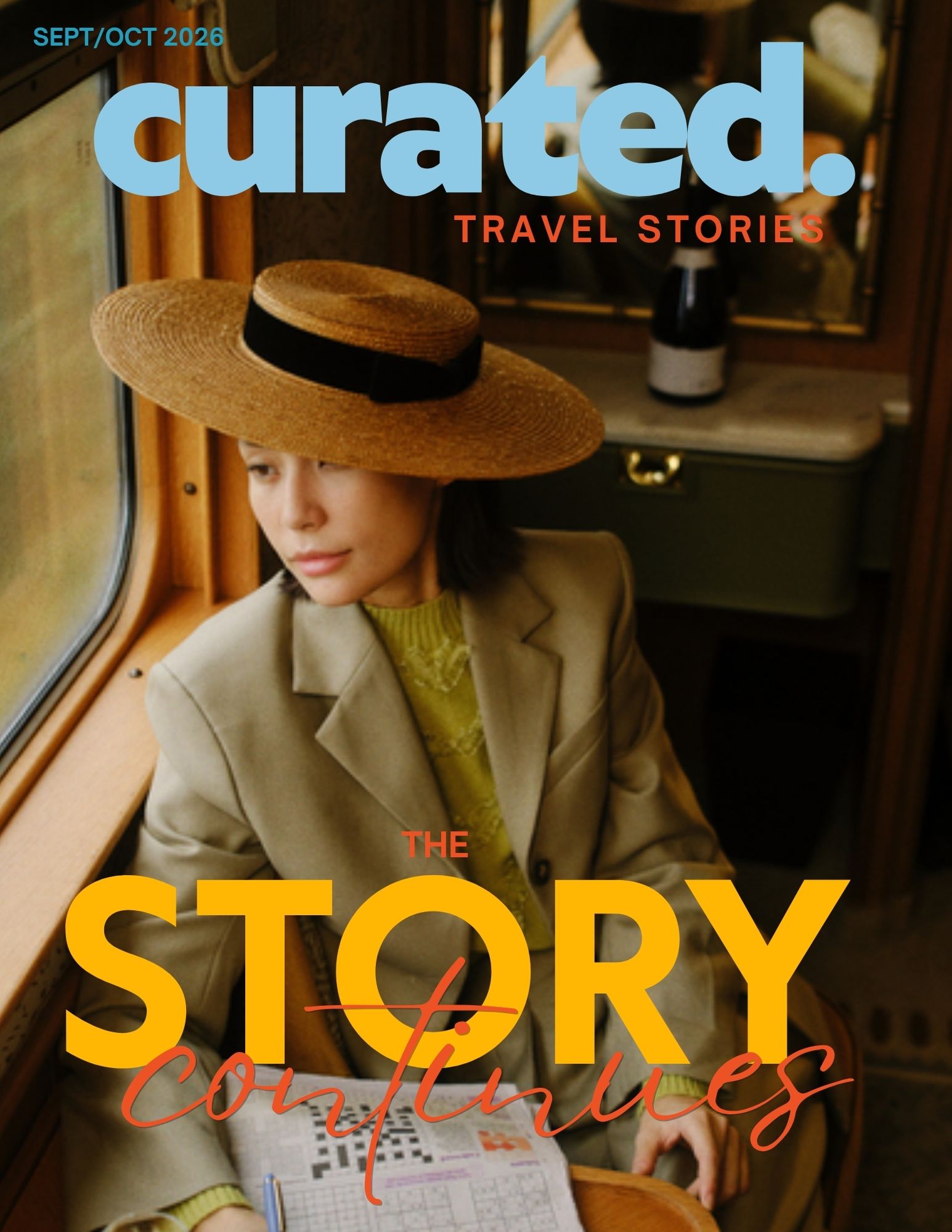
This piece is part of the latest issue of Curated Travel Magazine, where we explore travel through immersive stories, cultural insight, and thoughtfully curated experiences around the world.
Enjoyed this article? Read more or subscribe:
Read online: Explore the full issue and archive at curatedtravelmagazine.com/issues.html.
Digital Subscription: Subscribe or purchase digital editions on Zinio.
Print Edition: Prefer a physical copy? Order print editions directly via Lulu.