Perfection in Flaws
October 12, 2026
Drip. Drop. Drum. Rain against the maroon cover. Rolling off to land on a wet shoulder. Under an umbrella never meant for two, we walk slowly to keep in time. The air is warm, heavy with moisture. We weave in and out of the small shops along Main Street, ducking under awnings before slipping into the National Baseball Hall of Fame—less for the stats, and more for a dry room and a chance for our wool coats to dry.
There’s no crying in baseball, and on paper, there’s no rain in Cooperstown.
When we set off in the morning, the mental itinerary played out in clear, cloudless high-definition: a sun-dappled picnic by the shore, ice cream dripping over a paper cup on a wooden bench, a slow, hand-in-hand stroll past 19th-century porches, and an afternoon drifting through a quiet museum or two. It was the quintessential upstate postcard—the version of a road trip planned like an AI mood board, storybook and pristine, before we ever turned the key in the ignition.
Instead, the sky gave us charcoal gray and a steady drizzle.
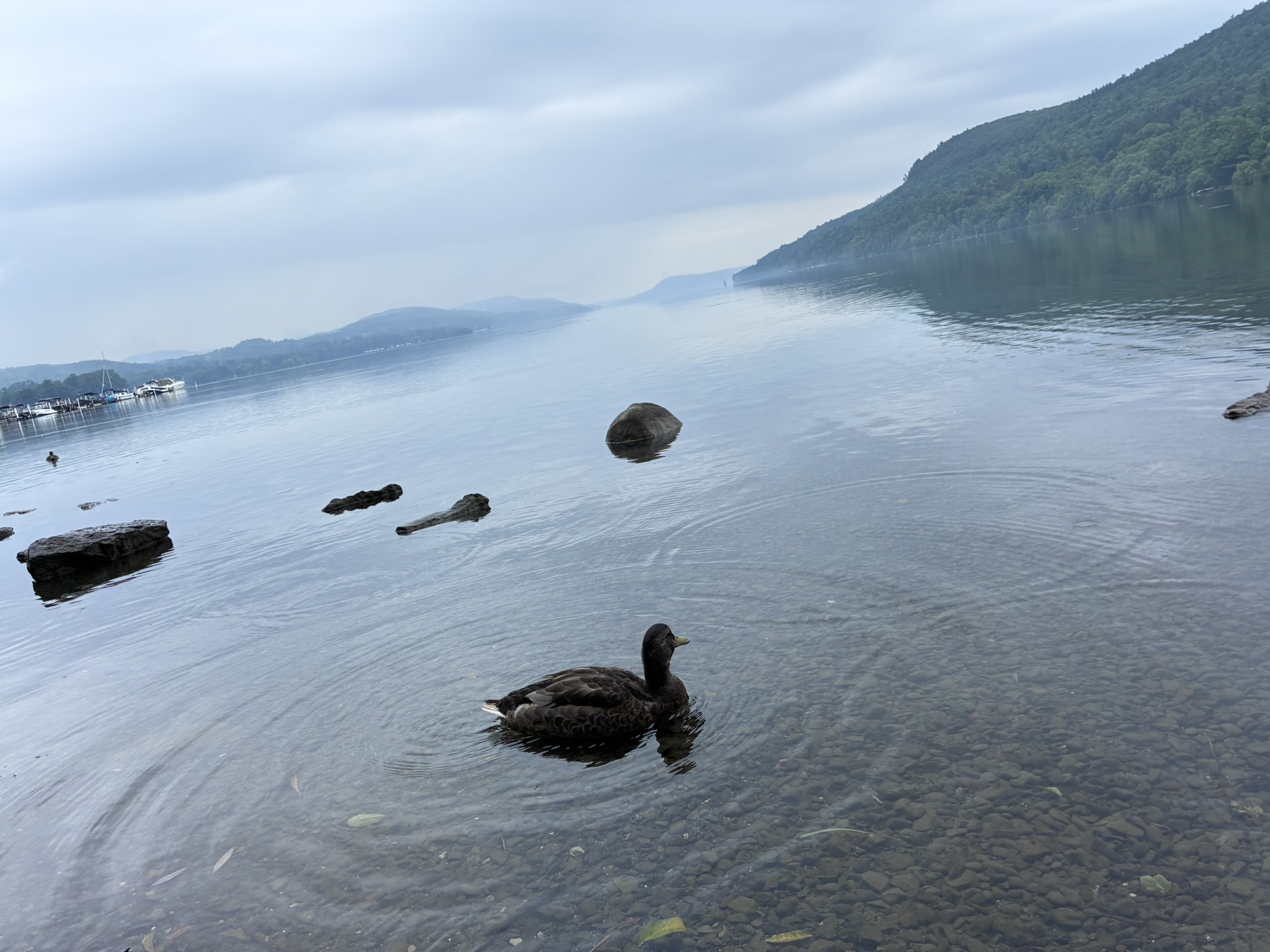
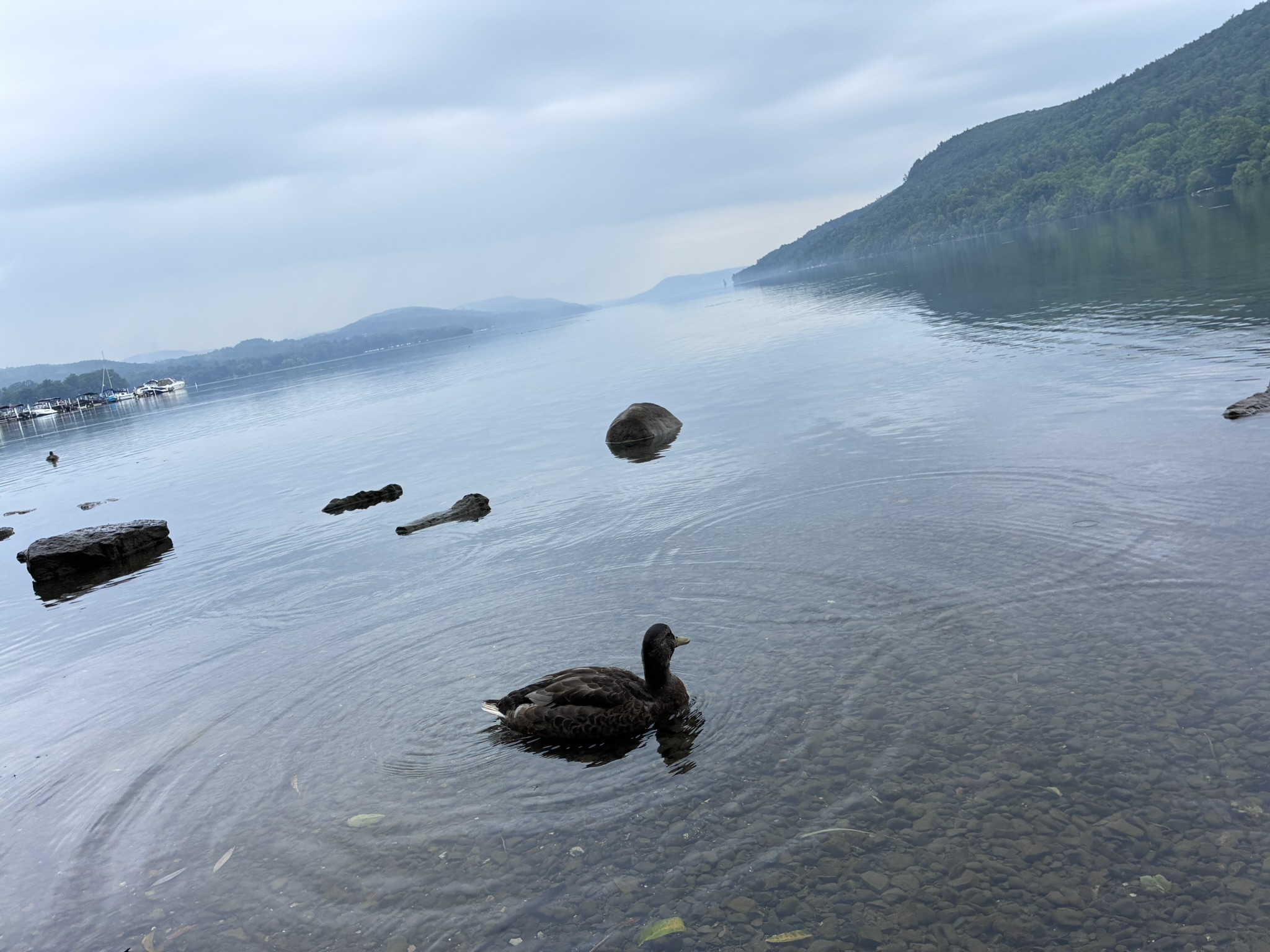
Yet when we emerged from the hall hours later, the downpour had softened into a gentle mist. We made our way down to the edge of Otsego Lake. The water stretched out still and glass-like, framed by low mist clinging to the tree line and a few geese prowling the damp shore for crumbs. Right then, the cloud cover fractured. A single shaft of pale afternoon sun broke through the gray, casting a warm, luminous glow across the far side of the lake—a light so sudden, heavy, and dramatic it looked almost staged.
Inside the quiet galleries of the Fenimore Art Museum, standing before the works of the Hudson River School, you begin to see 19th-century landscape painting for what it truly was: a sophisticated escape engine. As the Industrial Revolution swept across the American landscape, bringing clear-cut forests, iron foundries, and steam engines to the Hudson Valley, artists like Thomas Cole and Frederic Church didn't paint the smoke stacks. Instead, they retreated to their studios to engineer grand, composite canvases—stitching together sketches of different mountains, rivers, and skies to create an idealized, pristine wilderness that never existed in a single view. As the real world grew increasingly mechanized and dense, their art offered a stressed public an emotional sanctuary of untouched, luminous nature.
Two centuries later, our instinct in the face of rapid technological acceleration remains entirely unchanged. Where Church and Cole used oil pigments and composite sketching to fabricate an unblemished natural horizon, we now use artificial intelligence and prompt engineering to generate hyper-lit, flawless visual worlds at a keystroke. AI imagery is not a new digital anomaly; it is simply the modern iteration of the Hudson River School’s core impulse—a collective human longing to curate a pristine, frictionless refuge on a screen whenever our actual reality feels too fast, loud, or artificial.
Yet when we stepped back outside into the cool air, the mist over Otsego Lake offered a truth no curated canvas or generated pixel could match. Pulling up a photo on a phone screen—a rain-streaked selfie of us squeezed beneath that umbrella not built for two—the contrast was striking. Our hair was damp, our coats were slightly heavy with moisture, and the water behind us stretched out under a brooding, gray sky. But there, framed by the wet weather and the soft silver light on the lake, was a serene, undeniable smile lighting up our faces.
It was messy, unscripted, and entirely unprompted. The Hudson River School taught us to seek sanctuary in composite perfection, and modern technology promises us flawless, friction-free horizons. But standing on the damp shore of the Glimmerglass, wet shoes and all, the real lesson of travel becomes clear: a generated ideal gives us a dream, but true perfection is drawn in the flaws.
This piece is part of the latest issue of Curated Travel Magazine, where we explore travel through immersive stories, cultural insight, and thoughtfully curated experiences around the world.
Enjoyed this article? Read more or subscribe:
Read online: Explore the full issue and archive at curatedtravelmagazine.com/issues.html.
Digital Subscription: Subscribe or purchase digital editions on Zinio.
Print Edition: Prefer a physical copy? Order print editions directly via Lulu.