Under the Stars
December 03, 2025
Namibia – NamibRand Reserve: Recline under pristine skies in this 200,000+ hectare wilderness, a Gold-tier Dark Sky Reserve. Luxury camps like Little Kulala let you witness the Southern Cross, Carina Nebula, and twin Magellanic Clouds in unmatched clarity.
New Zealand – Aoraki Mackenzie Reserve: From Lake Tekapo to Mount Cook, the largest Dark Sky Reserve in the Southern Hemisphere offers Maori-themed stargazing tours at Mount John Observatory. Snow-capped peaks and clear skies make the Milky Way and Magellanic Clouds spectacular.
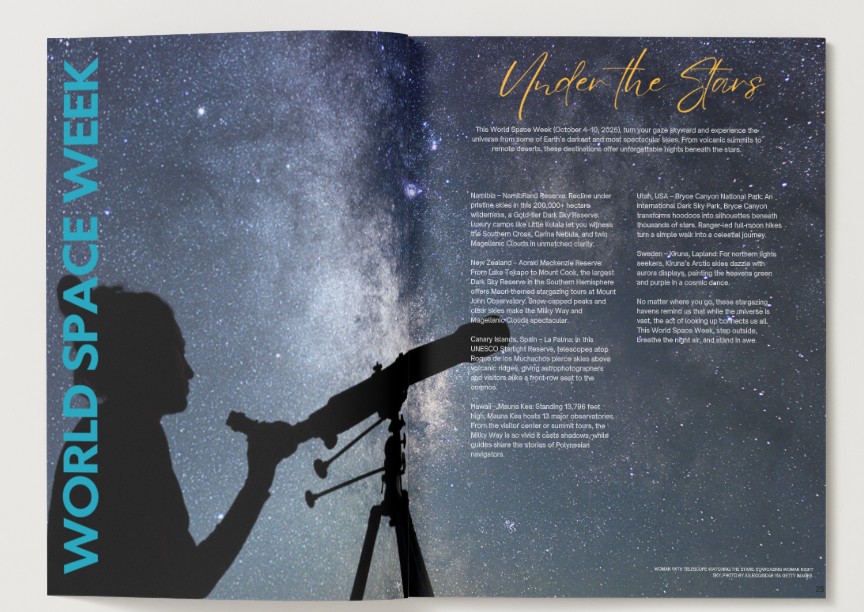
Canary Islands, Spain – La Palma: In this UNESCO Starlight Reserve, telescopes atop Roque de los Muchachos pierce skies above volcanic ridges, giving astrophotographers and visitors alike a front-row seat to the cosmos.
Hawaii – Mauna Kea: Standing 13,796 feet high, Mauna Kea hosts 13 major observatories. From the visitor center or summit tours, the Milky Way is so vivid it casts shadows, while guides share the stories of Polynesian navigators.
Utah, USA – Bryce Canyon National Park: An International Dark Sky Park, Bryce Canyon transforms hoodoos into silhouettes beneath thousands of stars. Ranger-led full-moon hikes turn a simple walk into a celestial journey.
Sweden – Kiruna, Lapland: For northern lights seekers, Kiruna’s Arctic skies dazzle with aurora displays, painting the heavens green and purple in a cosmic dance. No matter where you go, these stargazing havens remind us that while the universe is vast, the act of looking up connects us all. This World Space Week, step outside, breathe the night air, and stand in awe.
Read the full story—and more seasonal travel inspiration—in the latest issue of Curated Magazine: